
Understanding the True Investment Behind a Barndominium Build
March 5, 2026
How Much Does It Cost to Build a Pole Barn? A Complete Pricing Guide
April 29, 2026
You’ve picked the site.
You can already picture the finished pole barn standing strong through Northwest rain and wind.
Then comes the question no one loves to ask.
Do I need a permit?
Skipping that step might seem faster. But one inspection, one complaint, or one future sale can turn a simple project into an expensive problem.
A building permit keeps your project legal, safe, and protected from setbacks.
In this article, we’ll break down when a permit is required, how rules vary across the Pacific Northwest, and how to move forward with confidence.
Table of contents
- Do You Need a Building Permit for a Pole Barn?
- 4 Requirements of Pole Barn Building Permits
- Factors That May Influence Pole Barn Building Permit Requirements
- How Do I Secure a Building Permit for a Pole Barn? 4 Steps
- Pacific Pole Barns: Helping You Design a Pole Barn That Meets Local Permit Requirements
Do You Need a Building Permit for a Pole Barn?
The honest answer is, it depends.
In many areas, a building permit is required for pole barns over a certain size, often 200 square feet or more. Permits are also commonly required if the structure will be used for residential, commercial, or conditioned space.
Smaller accessory buildings may be exempt in some counties. Agricultural-use structures sometimes face fewer restrictions. Still, rules vary widely across cities and counties throughout the Pacific Northwest.
Factors that often affect permit requirements include:
- Total square footage
- Intended use of the building
- Electrical or plumbing installation
- Foundation type
- Property zoning and setbacks
Because local codes differ, the safest move is to contact your city or county planning department before you build. They will have the final say on what is allowed on your property and what approvals are required.
Taking the time to comply with local codes protects your investment, helps avoid fines or stop-work orders, and gives you peace of mind knowing your structure is built to standard.
When you are ready to move forward, choosing a high-quality pole barn from Pacific Pole Buildings ensures you start with engineered plans designed to meet local requirements across the Pacific Northwest.
4 Requirements of Pole Barn Building Permits
If a permit is required for your pole barn, the approval process will usually focus on a few key aspects of the build. While exact standards vary by county and state, most building departments look at similar core elements before issuing a permit.
Below, we will walk through four common requirements that often come into play during the permitting process so you know what to expect before you apply.
#1: Foundation Depth
In a pole barn, the foundation is everything.
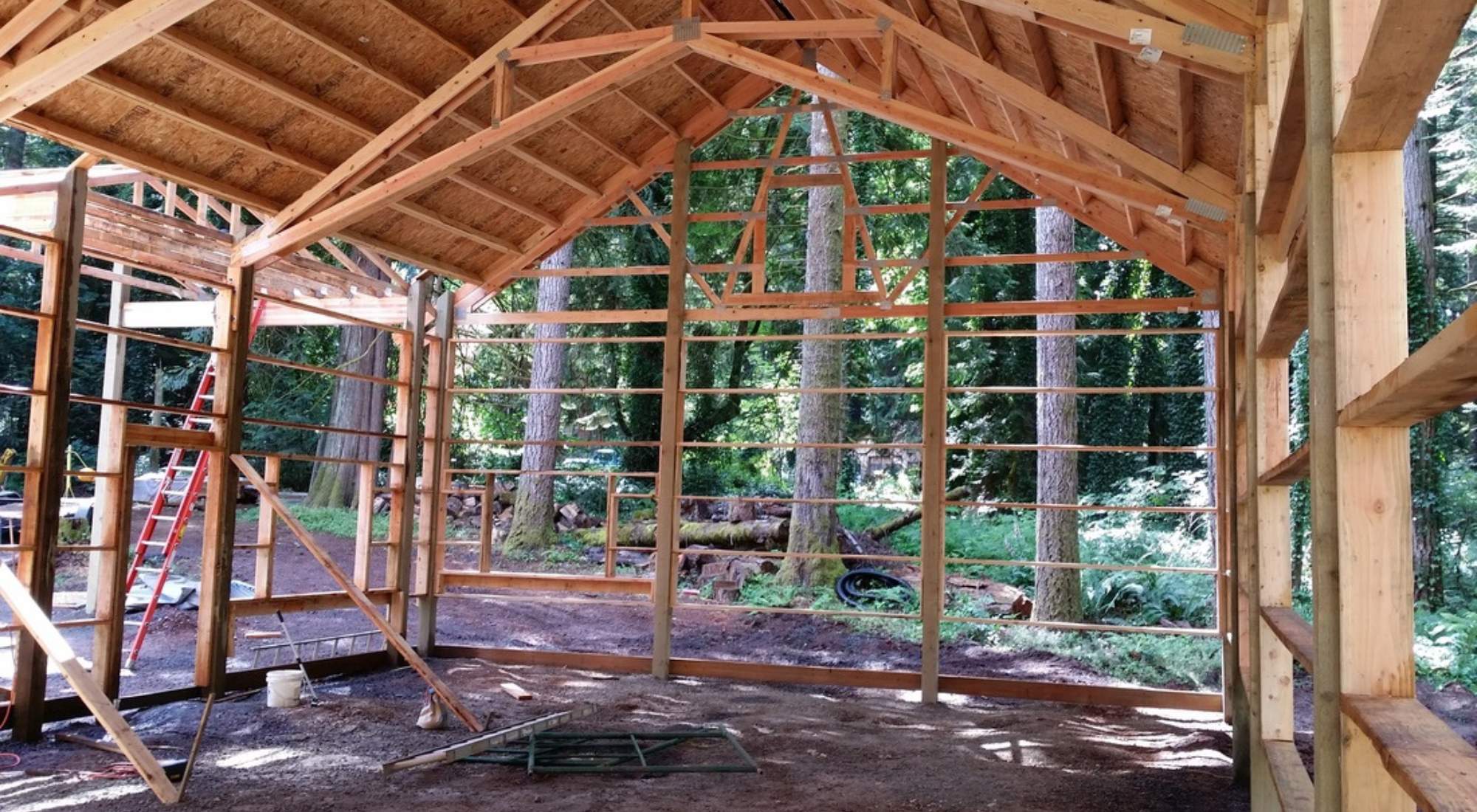
Unlike traditional construction that relies on a continuous concrete footing, pole barns depend on large structural posts set directly into the ground. These posts carry the weight of the roof and walls, anchor the building against wind, and keep the entire structure stable over time.
Because the posts do so much of the structural work, building departments pay close attention to how deep they are set. In many areas of the Pacific Northwest, posts are typically required to be embedded about 4 feet into the ground. This depth often aligns with frost line requirements and helps prevent shifting caused by soil movement or freeze-thaw cycles.
Permit reviewers may look at:
- Post depth below grade
- Hole diameter
- Concrete footing or backfill method
- Soil type on the property
Meeting foundation depth requirements ensures your pole barn stays level, secure, and built to withstand Northwest weather conditions.
#2: Snow and Wind Load Capacity
In the Pacific Northwest, weather is not something you can ignore.
Heavy snow in mountain regions. Strong coastal winds. Seasonal storms that test every structure on your property.
Because of this, building departments carefully review a pole barn’s snow and wind load capacity before approving a permit. These ratings show how much weight the roof can safely support and how much wind pressure the structure can withstand.
Typical requirements depend on your exact location and elevation. Mountain areas often require higher snow load ratings. Coastal and open rural areas may require stronger wind resistance.
Considerations may include:
- Roof pitch and truss design
- Engineered load calculations
- Wind exposure category
- Connection hardware and bracing
Using engineered plans that meet local load requirements helps ensure your pole barn stands strong through every season.
#3: Size
The overall size of your pole barn plays a major role in the permitting process.
Many cities and counties place limits on accessory structure square footage, building height, or both. Smaller buildings may qualify for simplified review, while larger structures often require full permits, engineered plans, and additional inspections.
Common size-related standards may include:
- Maximum square footage for detached structures
- Maximum wall height or overall peak height
- Lot coverage limits based on property size
- Setback requirements from property lines
If your pole barn exceeds certain thresholds, additional approvals may be required. Checking these limits early helps you design a structure that fits both your needs and your local regulations.
#4: Property Setback
Setbacks define how far your pole barn must be from property lines, roads, waterways, or other structures.
These rules exist to ensure safety, allow access for maintenance or emergency vehicles, protect neighboring properties, and prevent overcrowding on your lot.
Typical setback requirements may include:
- Distance from side and rear property lines
- Distance from front yard or road right-of-way
- Distance from wells, septic systems, or water features
- Special considerations for easements or flood zones
Following setback requirements keeps your pole barn compliant, safe, and functional, while avoiding fines or the need to move a completed structure.
Factors That May Influence Pole Barn Building Permit Requirements
Climatic Conditions
Local weather plays a big role in determining pole barn permit requirements. Areas prone to strong winds, heavy snowfall, or seismic activity often require extra structural measures to keep buildings safe.
Flood-prone zones may also have specific rules to protect both the structure and its occupants. These environmental factors can influence:
- Roof and wall design
- Materials used for construction
- Foundation depth and type
- Overall project cost
Accounting for local climate during planning ensures your pole barn meets code and is built to last through every season.
Intended Purpose
The way you plan to use your pole barn can affect what permits you need.
Agricultural structures, such as barns used for livestock or storing farm equipment, often have more lenient regulations. Some may even be exempt from certain building codes.
Residential or commercial uses, on the other hand, usually face stricter requirements. These projects often require full permits, engineered plans, and inspections to ensure safety and compliance.
Understanding your intended purpose early helps you navigate local rules and avoid surprises during the permitting process.
How Do I Secure a Building Permit for a Pole Barn? 4 Steps
Getting a building permit may feel overwhelming, but breaking it into clear steps makes the process manageable.
Below are four key steps to help you secure approval and move forward with your pole barn project confidently.
#1: Contact Your Local Building Department
Start by reaching out to your city or county building department. Provide your property address or parcel number and explain the type of pole barn you want to build and its proposed location on your lot.
The department can tell you whether a permit is required and outline any specific regulations for setbacks, size, or structural requirements. In many cases, a quick phone call is enough to get initial guidance.
Sometimes, you may need to provide a simple site plan showing property lines, existing structures, and your proposed building. Even if a permit is not required, consulting with professionals helps ensure your design is safe, compliant, and protects your investment.
#2: Submit Required Documentation
Once you know a permit is required, the next step is preparing your application. This usually involves submitting several key documents to your local building department:
- A detailed site plan showing property lines, existing structures, and where the pole barn will go
- Engineered building plans, including foundation details, framing layouts, and cross-sections
- Structural calculations, especially for larger or more complex designs
- Proof of property ownership or written permission from the property owner
Some areas may also require additional documents, such as a soils report or environmental assessment. Always check with your local building department for a full checklist of required items.
While Pacific Pole Buildings does not construct pole barns, we help clients design their structure and provide materials to bring it to life. This includes assisting with engineering plans and preparing materials that align with permit requirements.
#3: Clarify or Make Revisions
After submitting your application, the building department may review your plans and request clarifications or revisions.
This could involve adjusting your site layout, modifying structural details, or providing additional documentation. Responding promptly and working cooperatively helps keep the process moving smoothly.
Following up regularly ensures that any questions are addressed and that your permit moves toward approval without unnecessary delays.
#4: Schedule Inspections
Once your permit is approved and construction begins, inspections may be required at key stages of the build.
Common inspection points include:
- Foundation installation
- Framing and structural assembly
- Final completion before occupancy or use
Scheduling inspections on time and ensuring each stage meets code is essential. Passing inspections keeps your project compliant and avoids delays or penalties.
Pacific Pole Barns: Helping You Design a Pole Barn That Meets Local Permit Requirements
At Pacific Pole Buildings, we help clients in the Pacific Northwest design custom pole barns that fit their needs and comply with local building codes.
While we do not construct the buildings ourselves, we provide engineered plans, high-quality materials, and expert guidance to make sure your project meets permit requirements. Our team can assist with design choices, load calculations, and planning for snow, wind, and site conditions to ensure your pole barn is safe and durable.
We offer a variety of pole barn kits and custom options, including workshops, storage buildings, agricultural barns, and more. Our knowledgeable staff is here to answer questions, review your site plans, and guide you through the permitting process.
To get started, contact Pacific Pole Buildings today via phone, email, or our website. We’ll help you design a pole barn that is built to last and ready for construction with confidence.